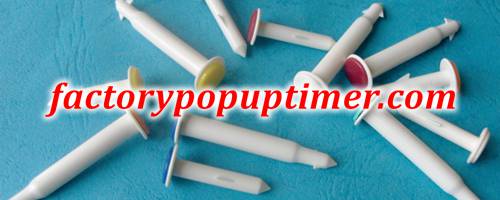
How Disposable Pop-Up Timer Factories Manage Custom Production Requirements for Global Markets
How Disposable Pop-Up Timer Factories Manage Custom Production Requirements for Global Markets
Global food companies and private label brands often require products that match their specific market needs. For disposable pop-up timers, this means working with a manufacturer that can manage customized requirements while maintaining stable production quality.
A professional disposable pop-up timer factory does not simply produce standard products. It develops manufacturing solutions that balance customization, efficiency, and consistency.
Understanding how factories manage custom production helps buyers select the right long-term manufacturing partner.
Why Custom Manufacturing Matters for Disposable Pop-Up Timer Buyers
Different markets and customers may have different expectations regarding product specifications, packaging, and applications.
Custom manufacturing allows companies to develop solutions based on their own requirements instead of relying only on standard products.
Common reasons companies request customization include:
- Private label product development
- Market differentiation
- Specific food applications
- Retail packaging requirements
- Long-term brand strategy
What Can Be Customized in Disposable Pop-Up Timer Production?
A specialized factory can support customization in multiple areas.
| Customization Area | Examples |
|---|---|
| Product specifications | Activation temperature and product requirements |
| Appearance | Colors and product presentation |
| Packaging | Bulk packaging, retail packaging, private label packaging |
| Branding | Customer-specific product identification |
| Supply solutions | Customized production programs |
The Factory Process Behind Custom Production
Step 1: Understanding Customer Requirements
Every custom project begins with understanding the buyer's application and business goals.
Factories usually review:
- Target market
- Product usage
- Technical expectations
- Packaging requirements
- Order quantity
Step 2: Confirming Manufacturing Specifications
After requirements are reviewed, the factory confirms practical production details.
This stage helps ensure that customer expectations match manufacturing capability.
Important factors include:
- Product structure
- Material selection
- Temperature requirements
- Packaging design
Step 3: Sample Review and Approval
Before mass production, samples allow customers to evaluate the proposed solution.
Sample review helps confirm:
- Product appearance
- Functionality
- Packaging presentation
- Application suitability
Step 4: Transition to Commercial Production
Once specifications are approved, the factory prepares production planning.
Professional manufacturing requires coordination between:
- Materials
- Production processes
- Quality inspection
- Packaging operations
How Factories Balance Customization and Production Stability
One challenge in custom manufacturing is maintaining efficiency while meeting unique requirements.
Experienced factories achieve this through:
- Standardized production procedures
- Clear specification management
- Controlled manufacturing processes
- Professional project communication
The goal is to provide customized solutions without sacrificing product consistency.
Why Manufacturing Flexibility Is Important for Global Buyers
International markets have different product expectations and business models.
A flexible factory can support:
- Different packaging formats
- Different customer requirements
- Different order volumes
- Different market applications
Manufacturing flexibility helps companies respond faster to market opportunities.
The Importance of Specification Management
Custom projects require accurate management of product information.
Professional factories carefully manage:
- Approved specifications
- Production instructions
- Packaging details
- Quality expectations
Clear specification management reduces misunderstandings during production.
Custom Manufacturing for Different Food Industry Applications
Disposable pop-up timers may be customized for various commercial applications, including:
- Poultry processing
- Turkey products
- Frozen food manufacturing
- Ready-to-cook products
- Retail food programs
- Foodservice solutions
Why Experienced Factories Handle Custom Projects Better
Custom manufacturing requires practical production knowledge.
Experienced factories are usually better prepared to manage:
- Customer communication
- Production adjustments
- Quality expectations
- Commercial delivery requirements
Common Challenges in Custom Manufacturing
Unclear Requirements
Incomplete specifications can create delays and misunderstandings.
Limited Production Capability
Not every supplier has the ability to convert custom ideas into stable production.
Lack of Long-Term Support
Successful custom programs require continuous cooperation between buyers and factories.
Frequently Asked Questions About Custom Disposable Pop-Up Timer Production
Can disposable pop-up timer factories make customized products?
Yes. Professional factories can support customized specifications, packaging, and OEM production requirements.
What customization options are available?
Common options include product specifications, packaging, branding requirements, and supply solutions.
Why is factory experience important for custom projects?
Experienced factories understand how to convert customer requirements into practical manufacturing processes.
How do buyers start a custom production project?
Buyers usually begin by discussing application requirements, specifications, packaging needs, and expected order volumes.
Can custom products be produced in bulk?
Yes. Professional manufacturers can combine customization with large-scale production capability.
Turning Custom Requirements Into Reliable Manufacturing Solutions
For global buyers, a capable disposable pop-up timer factory provides more than production capacity. It provides the ability to transform customized ideas into reliable commercial products.
Through professional communication, controlled processes, and manufacturing experience, factories help brands create products that meet specific market requirements.
Choosing the right manufacturing partner is the first step toward successful custom product development.
Disclaimer: The term "pop up timer" has become a common product category name in the food thermometer industry. This website represents an independent manufacturer from China specializing in disposable pop-up timers and temperature indicators. We are not affiliated with, authorized by, or connected to any other brands, companies, or trademark owners mentioned in the market.