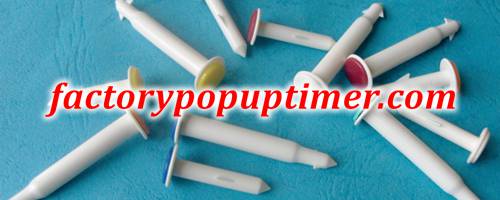
Disposable Pop-Up Timer Factory vs Trading Company: What Global Buyers Should Know
Disposable Pop-Up Timer Factory vs Trading Company: What Global Buyers Should Know
When purchasing disposable pop-up timers for commercial food applications, many international buyers face an important decision: should they work directly with a disposable pop-up timer factory or purchase through a trading company?
For small trial orders, both options may appear similar. However, for long-term B2B supply, OEM projects, and large-volume purchasing, the difference between a direct manufacturer and an intermediary supplier can significantly affect cost, communication, product consistency, and supply reliability.
Disposable pop-up timers, also known as pop-up disposable cooking thermometers or popup disposable cooking timers, are widely used in turkey processing, poultry production, meat manufacturing, frozen food, and ready-to-cook meal industries. Because these products are integrated into food applications, choosing the correct supply partner is an important part of supply chain management.
Understanding the Difference Between a Factory and a Trading Company
A disposable pop-up timer factory is directly responsible for manufacturing the product, including production processes, material selection, assembly, and quality control.
A trading company typically purchases products from one or more factories and sells them to customers under its own business model.
Both business models have their own role in international trade, but industrial buyers should understand the differences before making sourcing decisions.
Advantages of Working Directly with a Disposable Pop-Up Timer Factory
1. Direct Access to Manufacturing Knowledge
One of the biggest advantages of working with a factory is direct access to the people who understand the product.
A professional manufacturer can directly discuss:
- Product structure
- Temperature activation requirements
- Material selection
- Production improvements
- Quality issues
This technical communication is especially valuable when developing customized products or solving application-specific requirements.
2. More Competitive Factory Pricing
When products move through multiple supply chain levels, additional margins may be added before reaching the final buyer.
Direct factory sourcing can provide:
- More transparent pricing
- Better bulk order economics
- Reduced intermediary costs
- Improved purchasing efficiency
For companies purchasing large quantities, these differences can become significant over time.
3. Better Control Over Product Consistency
Food manufacturers need products that perform consistently across every production batch.
A direct factory relationship allows buyers to communicate quality expectations directly with production teams.
Important areas include:
- Temperature accuracy
- Product dimensions
- Material specifications
- Packaging requirements
- Batch consistency
4. Stronger OEM and Private Label Support
Many B2B buyers require customized disposable pop-up timers rather than standard products.
A factory can usually provide deeper support for:
- Custom activation temperatures
- Custom colors
- Logo customization
- Private label programs
- Customized retail packaging
- Bulk packaging solutions
Because the manufacturer controls production, customization projects can be managed more efficiently.
Potential Limitations of Trading Company Supply
Trading companies can provide value through market knowledge, supplier coordination, and convenience. However, buyers should understand several potential limitations when sourcing specialized products.
Less Direct Production Communication
When technical questions arise, information must often pass through several communication layers before reaching the actual production team.
Limited Manufacturing Control
A trading company may not directly control:
- Production schedules
- Material sourcing
- Factory quality procedures
- Manufacturing changes
Reduced Customization Flexibility
For highly customized OEM projects, direct communication with the manufacturer is often more efficient.
Why This Difference Matters for Food Industry Buyers
For general consumer products, sourcing through different channels may have limited impact. However, food-related products require stronger attention to consistency, safety, and supply reliability.
Companies using disposable pop-up timers in commercial applications often need:
- Reliable repeat orders
- Consistent temperature performance
- Food-grade material control
- Stable production capacity
- Long-term supplier cooperation
These requirements make direct factory partnerships especially valuable.
How to Identify a Real Disposable Pop-Up Timer Manufacturer
Before establishing cooperation, buyers can evaluate suppliers through several practical questions.
- Does the company operate its own manufacturing facility?
- How long has it specialized in disposable pop-up timers?
- Can it explain the production process?
- Does it support OEM customization?
- Can it provide consistent bulk supply?
- Does it have international export experience?
A genuine manufacturer should be able to clearly explain its production capability and product expertise.
Factory Direct Supply for Different Types of Buyers
Poultry Processing Companies
Large poultry processors need stable supply and consistent product performance for ongoing production.
Food Distributors
Distributors benefit from competitive sourcing, reliable delivery, and customized packaging options.
Private Label Brands
Retail brands often require OEM solutions that match their own packaging and market positioning.
Importers and Wholesalers
Direct factory relationships can provide stronger pricing advantages and better long-term cooperation opportunities.
Frequently Asked Questions About Factory vs Trading Company Supply
Is buying directly from a factory always better?
For large-volume, OEM, and long-term supply projects, direct factory purchasing often provides advantages in pricing, communication, and customization.
Can trading companies provide good service?
Yes. Trading companies can provide valuable market support and supplier coordination. The best choice depends on the buyer's requirements.
Why do industrial buyers prefer direct manufacturers?
Industrial buyers often need technical communication, customization, and stable production support, which are easier to achieve through direct factory relationships.
What should buyers prioritize besides price?
Buyers should evaluate quality consistency, production capability, customization ability, communication efficiency, and long-term supply reliability.
Making the Right Sourcing Decision
Choosing between a disposable pop-up timer factory and a trading company depends on the buyer's business needs. For companies seeking long-term supply, OEM development, and reliable production support, working directly with a specialized manufacturer can provide significant advantages.
A strong factory partnership creates more than a product supply relationship. It creates a foundation for stable growth, better quality management, and a more efficient global supply chain.
Disclaimer: The term "pop up timer" has become a common product category name in the food thermometer industry. This website represents an independent manufacturer from China specializing in disposable pop-up timers. We are not affiliated with, authorized by, or connected to any other brands, companies, or trademark owners mentioned in the market.