Disposable Pop-Up Timer Manufacturing Process: How Professional Factories Ensure Reliable Performance
Disposable Pop-Up Timer Manufacturing Process: How Professional Factories Ensure Reliable Performance
For global food manufacturers and industrial buyers, understanding the disposable pop-up timer manufacturing process helps explain why supplier experience and production control are essential. Although a pop-up timer is a small temperature indication device, producing a reliable product requires careful coordination of materials, components, assembly processes, and quality inspection.
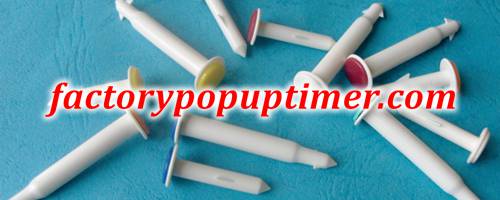
Disposable pop-up timers, also known as pop-up disposable cooking thermometers or popup disposable cooking timers, are widely used in turkey processing, poultry products, meat manufacturing, and ready-to-cook food applications. Their purpose is simple: provide a visible indication when the internal temperature of food reaches a predetermined level.
However, achieving consistent activation performance in large-volume production requires specialized manufacturing knowledge. Professional disposable pop-up timer factories focus on every stage, from material selection to final inspection, to ensure stable quality for international B2B customers.
Why Manufacturing Expertise Matters for Disposable Pop-Up Timers
Many buyers view disposable pop-up timers as simple plastic components. However, the product combines thermal sensing technology, mechanical movement, and food-contact material requirements.
A reliable manufacturing process must control:
- Temperature activation accuracy
- Component dimensions
- Material safety
- Assembly precision
- Product consistency between batches
For commercial food companies purchasing thousands or millions of units, manufacturing stability directly affects production reliability.
Step 1: Selecting Food-Grade Raw Materials
The manufacturing process begins with carefully selected raw materials. Since disposable pop-up timers are used with food products, material safety is a fundamental requirement.
Professional factories typically evaluate:
- Food-grade PA66 nylon components
- BPA-free material requirements
- Food extract-based thermal sensing wax
- Reliable metal spring components
Material consistency is important because variations in raw materials can influence product performance, durability, and temperature response.
Step 2: Precision Component Manufacturing
Disposable pop-up timers contain several small components that must work together accurately.
Manufacturing processes may include:
- Plastic injection molding
- Component forming
- Dimension control
- Surface inspection
Precision during component production helps maintain consistent assembly quality and reliable mechanical operation.
Step 3: Temperature Sensing System Assembly
The thermal sensing mechanism is the core functional part of a disposable pop-up timer.
The product is designed so that when food reaches the target internal temperature, the temperature-sensitive material changes behavior and activates the pop-up indicator.
Professional manufacturers carefully control:
- Thermal material filling
- Activation temperature settings
- Mechanical response
- Assembly accuracy
This process requires experience because small variations can influence activation timing and consistency.
Step 4: Assembly and Production Line Control
After individual components are prepared, the factory performs systematic assembly operations.
Production control focuses on:
- Correct component positioning
- Stable mechanical structure
- Appearance consistency
- Proper product function
For bulk orders, automated and standardized production procedures help maintain consistent output quality.
Step 5: Temperature Performance Testing
Temperature testing is one of the most important quality control steps for disposable pop-up timers.
Professional factories evaluate product performance through controlled testing procedures, including:
- Activation temperature verification
- Sample testing from production batches
- Mechanical movement inspection
- Final product evaluation
Consistent temperature performance is especially important for poultry processors and food manufacturers that require predictable cooking results.
Step 6: Final Inspection and Export Packaging
Before shipment, finished products undergo final inspection and packaging procedures.
Quality checks may include:
- Product appearance inspection
- Quantity verification
- Packaging inspection
- Carton preparation
- Shipment documentation review
Proper packaging is essential because disposable pop-up timers are often shipped internationally in bulk quantities.
How Manufacturing Quality Impacts Food Industry Applications
For household consumers, a single timer failure may affect one meal. For commercial food manufacturers, inconsistent performance across thousands of products can create much larger challenges.
Reliable manufacturing helps companies achieve:
- Consistent cooking results
- Reduced production uncertainty
- Improved customer confidence
- Lower quality management costs
This is why industrial buyers often prefer specialized factories rather than general suppliers.
OEM Manufacturing Process for Customized Pop-Up Timers
Many B2B customers require products customized for their own brands or applications. A professional OEM manufacturing process may include additional development stages.
- Requirement discussion
- Temperature specification confirmation
- Color selection
- Logo customization
- Packaging design
- Sample approval
- Mass production
Experienced OEM factories can help customers transform product requirements into practical manufacturing solutions.
Common Questions About Disposable Pop-Up Timer Production
Are disposable pop-up timers difficult to manufacture?
Although the product design is compact, reliable production requires knowledge of thermal sensing technology, component manufacturing, and quality control.
Why is temperature accuracy important for pop-up timers?
Temperature accuracy determines whether the product provides a reliable indication for food manufacturers and end users.
What materials are commonly used in disposable pop-up timers?
Professional products typically use food-contact suitable materials such as food-grade PA66 components, BPA-free materials, thermal sensing wax, and metal spring structures.
Can factories manufacture customized pop-up timers?
Yes. OEM manufacturers can provide customized temperatures, colors, logos, and packaging solutions according to customer requirements.
Why should buyers understand the manufacturing process?
Understanding production helps buyers identify professional suppliers, evaluate quality capability, and select reliable long-term partners.
Choosing a Manufacturer with Real Production Expertise
The quality of a disposable pop-up timer depends on much more than the final appearance of the product. It depends on material selection, manufacturing precision, temperature control, assembly processes, and quality management.
For global food companies, choosing a specialized disposable pop-up timer factory means gaining access to deeper product knowledge, stronger production control, and a more reliable supply chain.
A professional manufacturing partner does not simply produce products. It provides the consistency and technical support required for long-term commercial success.
Disclaimer: The term "pop up timer" is a commonly used product category name in the food thermometer industry. This website represents an independent disposable pop-up timer manufacturer from China. We are not affiliated with, authorized by, or connected to any other brands, companies, or trademark owners mentioned in the market.