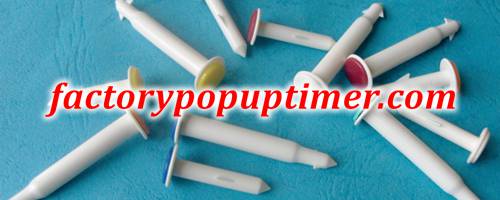
Why Direct Factory Sourcing Reduces Risks for Disposable Pop-Up Timer Buyers
Why Direct Factory Sourcing Reduces Risks for Disposable Pop-Up Timer Buyers
For companies purchasing disposable pop-up timers in bulk, choosing the right sourcing model can significantly influence product quality, communication efficiency, and long-term supply stability.
Many global buyers are moving toward direct factory sourcing because it provides closer cooperation with manufacturers and greater control over the supply chain.
Working directly with a specialized disposable pop-up timer factory allows buyers to better understand production capability, customization options, and quality management.
What Does Factory Direct Sourcing Mean?
Factory direct sourcing means buyers work directly with the manufacturer that produces the product instead of purchasing through multiple layers of intermediaries.
In a direct sourcing relationship, buyers communicate more closely with the production team regarding:
- Product requirements
- Specifications
- Packaging needs
- Production schedules
- Quality expectations
This creates a more transparent and efficient supply chain relationship.
Why Global Buyers Prefer Direct Factory Relationships
Professional buyers often look beyond simple product availability. They need suppliers that can support their business operations.
Direct factory cooperation provides advantages such as:
- Clearer communication
- Better product understanding
- More efficient customization
- Improved production visibility
- Stronger long-term cooperation
How Direct Sourcing Improves Communication
Communication is one of the most important parts of international manufacturing.
When buyers communicate directly with factories, they can discuss:
- Technical requirements
- Production details
- Quality concerns
- Packaging adjustments
- Future projects
Direct communication reduces misunderstandings and helps projects move forward more efficiently.
Factory Direct Sourcing Creates Better Supply Chain Control
A shorter supply chain gives buyers greater visibility into manufacturing.
Direct factory relationships help companies better understand:
| Supply Chain Area | Direct Factory Advantage |
|---|---|
| Production | Better understanding of manufacturing capability |
| Quality | Direct communication about standards |
| Customization | Faster discussion and adjustment |
| Planning | Improved cooperation for future orders |
Why Direct Factory Sourcing Helps OEM Projects
OEM and private label projects require detailed cooperation between buyers and manufacturers.
Direct factory communication helps with:
- Product specifications
- Packaging development
- Production planning
- Customization decisions
This is especially important for companies developing their own branded products.
The Cost Advantage of Working Directly With Manufacturers
Direct sourcing can reduce unnecessary supply chain layers.
However, the greatest value is not only the purchase price. It also comes from:
- Better communication efficiency
- Reduced coordination costs
- Improved project management
- Long-term supply stability
Experienced buyers evaluate the total value of cooperation rather than only the initial quotation.
Why Specialized Factory Direct Suppliers Are Valuable
A factory that focuses on one product category develops deeper expertise.
For disposable pop-up timers, specialization helps manufacturers understand:
- Product performance requirements
- Food industry applications
- Bulk purchasing expectations
- OEM customer needs
Risks of Relying on Multiple Supply Layers
Limited Product Knowledge
Intermediaries may not always have the same level of technical understanding as manufacturers.
Longer Communication Process
Additional communication layers may slow down decision-making.
Reduced Manufacturing Visibility
Buyers may have less direct understanding of production processes.
How Buyers Can Evaluate a Factory Direct Supplier
Before establishing direct cooperation, buyers should review:
- Product specialization
- Manufacturing experience
- Production capability
- Quality management
- Export experience
- OEM support ability
Factory Direct Sourcing for Different Food Industry Customers
Direct manufacturer relationships are valuable for:
- Poultry processors
- Turkey product manufacturers
- Frozen food companies
- Food distributors
- Retail private label brands
- Commercial food suppliers
Frequently Asked Questions About Factory Direct Pop-Up Timer Sourcing
What are the advantages of buying directly from a factory?
Direct sourcing improves communication, supply chain visibility, customization efficiency, and long-term cooperation.
Is factory direct sourcing only about lower prices?
No. The main advantages include better cooperation, production understanding, and supply reliability.
Why do OEM buyers prefer direct manufacturers?
OEM projects require close communication about specifications, packaging, and production details.
How can buyers verify a factory direct supplier?
Buyers should evaluate manufacturing experience, product specialization, quality systems, and production capability.
Can direct factories support large international orders?
Professional manufacturers can support bulk orders through organized production planning and supply management.
Direct Manufacturing Creates Stronger Long-Term Partnerships
For global buyers, factory direct sourcing provides a closer connection to the manufacturing process and creates a stronger foundation for reliable supply.
A specialized disposable pop-up timer factory can support companies through consistent production, OEM flexibility, and professional cooperation.
Choosing the right direct manufacturing partner helps businesses build more efficient and sustainable supply chains.
Disclaimer: The term "pop up timer" has become a common product category name in the food thermometer industry. This website represents an independent manufacturer from China specializing in disposable pop-up timers and temperature indicators. We are not affiliated with, authorized by, or connected to any other brands, companies, or trademark owners mentioned in the market.