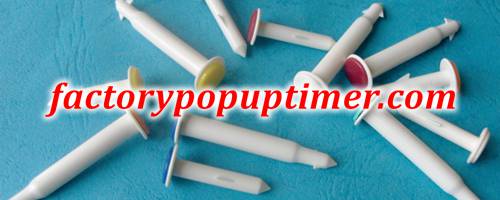
The Role of Manufacturing Experience in Disposable Pop-Up Timer Production
The Role of Manufacturing Experience in Disposable Pop-Up Timer Production
When global buyers evaluate a disposable pop-up timer supplier, manufacturing experience is one of the most important factors to consider.
Experience is not simply measured by the number of years a company has operated. True manufacturing experience comes from continuous product improvement, production optimization, quality management, and long-term cooperation with customers.
For companies purchasing disposable pop-up timers in bulk, an experienced factory provides greater confidence in product consistency, supply reliability, and project execution.
Why Manufacturing Experience Matters in Disposable Pop-Up Timer Production
Disposable pop-up timers may appear simple, but reliable production requires knowledge of materials, temperature performance, assembly processes, and quality control.
An experienced factory understands how different manufacturing factors influence the final product.
This experience helps manufacturers manage:
- Product specifications
- Material selection
- Production processes
- Quality standards
- Customer requirements
Experience Creates Better Product Understanding
A factory that has focused on one product category for many years develops deeper product knowledge.
This knowledge allows manufacturers to better understand:
- How disposable pop-up timers are used
- What buyers require from bulk orders
- How to maintain consistent performance
- How to improve production efficiency
Product expertise helps create smoother cooperation between manufacturers and buyers.
How Experience Improves Manufacturing Processes
Manufacturing processes are developed and improved over time.
Experienced factories usually have stronger systems for:
- Production organization
- Process control
- Quality inspection
- Problem solving
- Continuous improvement
These capabilities help reduce unnecessary production risks.
The Connection Between Experience and Product Consistency
For B2B buyers, consistency is often more important than a single successful order.
Long-term customers expect every shipment to maintain:
- The same specifications
- The same performance standards
- The same packaging requirements
- The same reliability
Manufacturing experience helps factories create repeatable production systems that support consistent results.
Experienced Factories Understand International Buyer Requirements
Global B2B cooperation involves more than manufacturing products.
International buyers often require suppliers to understand:
- Export procedures
- Documentation requirements
- Packaging expectations
- Communication standards
- Long-term supply planning
Manufacturers with international experience are usually better prepared for these requirements.
Experience Supports Better OEM Cooperation
OEM projects require close cooperation between buyers and manufacturers.
Experienced factories can better support:
- Product customization discussions
- Packaging development
- Specification confirmation
- Production coordination
A mature manufacturing process makes OEM cooperation more efficient.
Why Specialized Experience Is More Valuable Than General Manufacturing
A factory producing many unrelated products may not have the same depth of knowledge as a manufacturer focused on a specific category.
Product specialization allows manufacturers to continuously improve:
- Technical understanding
- Production methods
- Quality control systems
- Customer support processes
How Buyers Can Evaluate Manufacturing Experience
Years of operation are only one part of evaluation.
Buyers should also consider:
| Evaluation Area | Why It Matters |
|---|---|
| Product focus | Shows depth of expertise |
| Production history | Shows manufacturing stability |
| Customer experience | Shows ability to support different markets |
| Quality systems | Shows production control ability |
| OEM projects | Shows customization capability |
Common Problems Caused by Limited Manufacturing Experience
Unstable Product Performance
Factories without sufficient experience may have difficulty maintaining consistent production results.
Limited Problem-Solving Ability
Experienced manufacturers usually identify and solve production issues more efficiently.
Difficulty Managing Custom Projects
OEM projects require practical manufacturing knowledge and effective coordination.
Frequently Asked Questions About Disposable Pop-Up Timer Manufacturing Experience
Why is manufacturing experience important when choosing a supplier?
Experience helps manufacturers develop better production systems, quality control methods, and customer cooperation processes.
Does a factory with more experience always provide better products?
Experience is an important factor, but buyers should also evaluate quality systems, specialization, and production capability.
Why choose a specialized disposable pop-up timer manufacturer?
Specialized manufacturers usually have deeper knowledge of product requirements and industry applications.
How does experience improve OEM projects?
Experienced factories can provide better communication, production planning, and customization support.
What should buyers ask about factory history?
Buyers should ask about product focus, manufacturing experience, export markets, and long-term production capability.
Experience Builds Confidence in Long-Term Manufacturing Partnerships
For global buyers, choosing a disposable pop-up timer factory means selecting a partner capable of supporting consistent production over time.
Manufacturing experience represents accumulated knowledge, improved processes, and stronger cooperation ability.
A specialized and experienced factory provides the foundation for reliable supply, professional OEM support, and long-term business growth.
Disclaimer: The term "pop up timer" has become a common product category name in the food thermometer industry. This website represents an independent manufacturer from China specializing in disposable pop-up timers and temperature indicators. We are not affiliated with, authorized by, or connected to any other brands, companies, or trademark owners mentioned in the market.