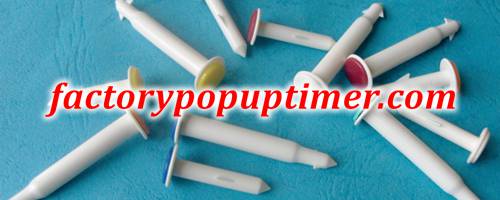
How Disposable Pop-Up Timer Factories Maintain Precision for Food Temperature Indication
How Disposable Pop-Up Timer Factories Maintain Precision for Food Temperature Indication
For food manufacturers, temperature indication products must provide consistent and reliable performance. A disposable pop-up timer may appear simple, but producing a dependable temperature indicator requires careful control of materials, manufacturing processes, and quality standards.
Professional disposable pop-up timer factories focus on precision throughout the entire production process to ensure stable performance for commercial food applications.
Manufacturing accuracy is created through experience, process control, and continuous improvement.
Why Precision Matters in Disposable Temperature Indicators
Temperature indication plays an important role in many food applications. Commercial users need products that provide predictable performance during production, preparation, and distribution.
Reliable temperature indicators help businesses achieve:
- Consistent product expectations
- Better production management
- Improved quality control
- More reliable food processing operations
Precision Starts With Product Design and Material Selection
A professional factory understands that product performance depends on every component working together.
Important manufacturing considerations include:
- Component design
- Material characteristics
- Temperature response requirements
- Production consistency
Careful material selection provides the foundation for stable product performance.
How Specialized Factories Control Manufacturing Accuracy
Maintaining consistent performance in bulk production requires standardized manufacturing methods.
Professional factories focus on controlling:
| Control Area | Manufacturing Focus |
|---|---|
| Raw materials | Stable quality and consistent supply |
| Production process | Repeatable manufacturing procedures |
| Assembly | Accurate product construction |
| Inspection | Performance verification |
| Packaging | Protection and order consistency |
The Importance of Process Control in Bulk Production
Large-volume manufacturing requires more than producing large quantities. It requires every batch to meet the same expectations.
Process control helps factories maintain:
- Product consistency
- Stable performance
- Reliable production results
- Repeat order quality
Why Manufacturing Experience Improves Product Reliability
Years of focused manufacturing experience allow factories to better understand production challenges.
Experienced manufacturers develop stronger capabilities in:
- Identifying potential issues
- Improving production methods
- Managing specifications
- Supporting customer requirements
Quality Inspection Throughout Production
Professional quality management is not limited to final inspection.
Effective manufacturing systems include quality control during different stages:
- Incoming material evaluation
- Production monitoring
- Product checking
- Final shipment inspection
Continuous inspection helps maintain stable quality for bulk orders.
Why Food Companies Require Reliable Temperature Indicators
Food manufacturers operate under strict requirements where product consistency and reliability are important.
Industries using disposable pop-up timers include:
- Poultry processing
- Turkey production
- Frozen food manufacturing
- Ready-to-cook food production
- Commercial foodservice
The Role of a Specialized Factory in Quality Assurance
A specialized manufacturer develops deeper understanding of the product category and its applications.
This expertise helps factories improve:
- Manufacturing procedures
- Quality standards
- Production efficiency
- Customer communication
Why Buyers Should Evaluate Manufacturing Capability
When selecting a supplier, professional buyers should look beyond product catalogs.
Important evaluation factors include:
- Manufacturing history
- Product specialization
- Quality management system
- Production capability
- Technical knowledge
Common Causes of Inconsistent Product Performance
Uncontrolled Materials
Variations in materials can affect product consistency and reliability.
Weak Production Management
Without standardized processes, different production batches may have inconsistent results.
Lack of Product Expertise
Manufacturers without deep product knowledge may not fully understand performance requirements.
Frequently Asked Questions About Disposable Pop-Up Timer Accuracy
How do factories maintain disposable pop-up timer accuracy?
Factories maintain accuracy through controlled materials, standardized processes, production monitoring, and quality inspection.
Why is manufacturing experience important?
Experienced manufacturers understand production challenges and can continuously improve product consistency.
What makes a disposable temperature indicator reliable?
Reliable products depend on proper design, suitable materials, controlled production, and quality management.
Do bulk orders require stronger quality control?
Yes. Large-volume orders require consistent manufacturing systems to maintain the same product performance.
Why should food companies choose specialized factories?
Specialized factories usually have deeper product knowledge and stronger ability to maintain consistent quality.
Precision Manufacturing Builds Buyer Confidence
For global food companies, reliable temperature indication begins with reliable manufacturing.
A specialized disposable pop-up timer factory combines product knowledge, process control, and quality management to support consistent commercial production.
Precision is not achieved by one step. It is built through years of focused manufacturing experience and continuous improvement.
Disclaimer: The term "pop up timer" has become a common product category name in the food thermometer industry. This website represents an independent manufacturer from China specializing in disposable pop-up timers and temperature indicators. We are not affiliated with, authorized by, or connected to any other brands, companies, or trademark owners mentioned in the market.