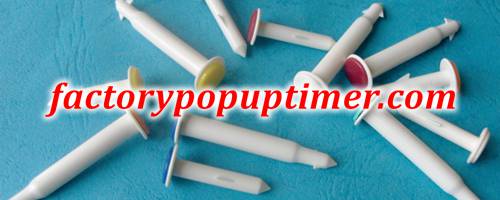
How Disposable Pop-Up Timer Factories Help Global Buyers Build Reliable Sourcing Strategies
How Disposable Pop-Up Timer Factories Help Global Buyers Build Reliable Sourcing Strategies
For global companies, successful sourcing is not only about finding a product at a competitive price. It is about building a reliable supply system that supports quality, delivery, customization, and long-term business growth.
When purchasing disposable pop-up timers in bulk, professional buyers increasingly look for manufacturing partners rather than temporary suppliers.
A specialized disposable pop-up timer factory helps companies develop stronger sourcing strategies through stable production, direct communication, and long-term cooperation.
Why Sourcing Strategy Matters for Disposable Pop-Up Timer Buyers
Many companies initially focus on product price when selecting suppliers. However, experienced procurement teams understand that supplier selection affects the entire business operation.
A reliable sourcing strategy considers:
- Product consistency
- Supply stability
- Production capability
- Customization support
- Future business growth
The right manufacturing partner can reduce risks and create more predictable supply conditions.
From Product Purchasing to Manufacturing Partnership
Traditional purchasing focuses on completing individual transactions. Strategic sourcing focuses on building long-term value.
| Traditional Purchasing | Strategic Manufacturing Partnership |
|---|---|
| Focus on individual orders | Focus on long-term cooperation |
| Price-driven decisions | Total value evaluation |
| Limited supplier communication | Direct collaboration |
| Short-term needs | Future growth planning |
How Specialized Factories Support Better Sourcing Decisions
A specialized factory provides buyers with deeper understanding of the product category.
This helps companies evaluate:
- Technical requirements
- Production feasibility
- Quality expectations
- Customization possibilities
Better product understanding leads to better sourcing decisions.
Key Factors in a Reliable Disposable Pop-Up Timer Sourcing Strategy
1. Selecting a Product-Focused Manufacturer
Manufacturers specializing in one product category usually develop stronger expertise and more mature production systems.
Product focus allows factories to continuously improve manufacturing processes and customer support.
2. Evaluating Production Capability
A supplier should be able to support current requirements as well as future growth.
Buyers should consider:
- Production capacity
- Repeat order support
- Manufacturing stability
- Delivery planning
3. Understanding Quality Management
Quality consistency is essential for companies using disposable pop-up timers in commercial food applications.
Professional buyers evaluate:
- Material control
- Production processes
- Inspection procedures
- Batch consistency
4. Considering OEM and Customization Requirements
Many businesses need products that match their own market strategies.
A capable factory should support:
- Private label projects
- Custom packaging
- Product requirements
- Long-term customized supply
How Factory Relationships Reduce Supply Risks
A stable factory relationship provides greater visibility into production.
Direct cooperation helps buyers understand:
- Manufacturing schedules
- Production conditions
- Quality management
- Future planning
This transparency helps companies make more informed purchasing decisions.
Why Food Companies Need Long-Term Supplier Relationships
Food industries often require continuous supply rather than occasional purchases.
Long-term supplier relationships provide benefits including:
- Improved communication
- Better product understanding
- More efficient order management
- Faster problem solving
- Stronger cooperation
Building a More Efficient Global Supply Chain
A professional manufacturing partner contributes to supply chain efficiency by supporting:
- Production planning
- Inventory management
- Product consistency
- Market expansion
The supplier relationship becomes part of the company's overall operational strategy.
Common Mistakes in Supplier Selection
Choosing Only the Lowest Price
The lowest quotation does not always provide the best long-term value.
Ignoring Manufacturing Experience
A supplier's production knowledge directly affects quality and reliability.
Changing Suppliers Frequently
Frequent supplier changes can increase communication costs and operational uncertainty.
Frequently Asked Questions About Disposable Pop-Up Timer Sourcing
How should companies source disposable pop-up timers?
Companies should evaluate specialized manufacturers based on product expertise, quality systems, production capability, and long-term cooperation ability.
Why work directly with a factory?
Direct factory relationships provide better communication, clearer production understanding, and stronger supply chain control.
What makes a reliable supplier?
A reliable supplier provides consistent quality, stable production, professional communication, and long-term support.
Should buyers focus only on price?
No. Professional buyers consider total value, including quality, reliability, and supply stability.
Can factories support growing businesses?
Yes. Experienced manufacturers can support increasing demand through organized production and long-term cooperation.
A Strong Factory Partnership Creates Better Sourcing Results
For global buyers, choosing a disposable pop-up timer factory is a strategic decision that affects supply reliability and business growth.
A specialized manufacturer provides the foundation for stable production, professional cooperation, and long-term sourcing success.
The strongest supply chains are built through reliable partnerships between buyers and experienced manufacturers.
Disclaimer: The term "pop up timer" has become a common product category name in the food thermometer industry. This website represents an independent manufacturer from China specializing in disposable pop-up timers and temperature indicators. We are not affiliated with, authorized by, or connected to any other brands, companies, or trademark owners mentioned in the market.